Indoor air quality plays a major role in the comfort, health, and overall efficiency of any residential or commercial environment. Clean, properly balanced indoor air helps create healthier spaces, improves comfort, and supports better day-to-day productivity. Poor air quality caused by dust, allergens, pollutants, or improper ventilation can negatively impact both indoor comfort and HVAC system performance over time.
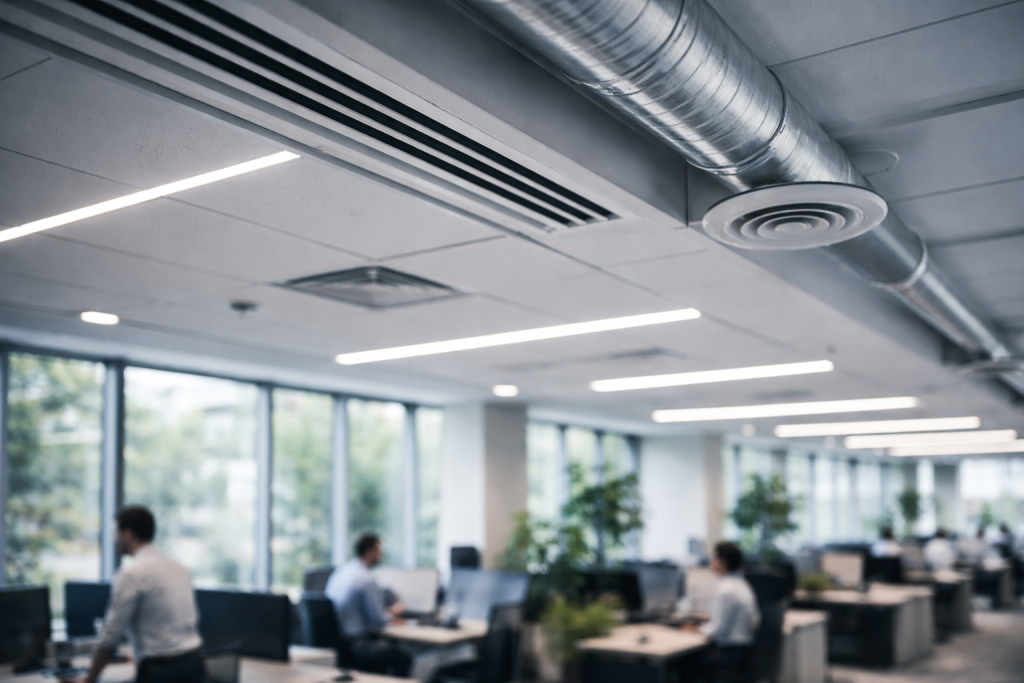
Proper ventilation and airflow are essential for maintaining healthy indoor air quality. HVAC systems help circulate fresh air throughout a property while removing airborne contaminants and stale air. Without routine maintenance, dust, debris, and allergens can build up within filters, ductwork, and ventilation components, reducing airflow efficiency and impacting overall system performance. Regular inspections, duct cleaning, and filter replacement help maintain cleaner air and a more efficient HVAC system.
Humidity control also plays an important role in indoor comfort and air quality. Excess humidity can contribute to mold growth and moisture-related issues, while overly dry air may cause discomfort and respiratory irritation. A properly maintained HVAC system helps regulate indoor humidity levels, creating a healthier and more balanced indoor environment while protecting building materials and equipment.
Modern air filtration and purification systems can further improve indoor air quality by capturing airborne particles such as dust, pollen, and other contaminants. High-efficiency filtration solutions help support cleaner airflow, improved comfort, and healthier indoor conditions for homes, offices, retail spaces, and commercial facilities.
Maintaining good indoor air quality requires the right HVAC system, proper airflow management, and regular maintenance. By prioritizing clean air and system efficiency, property owners can create more comfortable environments while improving long-term HVAC performance and energy efficiency.